








Date Labelling: Use-By, Best Before, and What Your Prepared Food Labels Need to Say
The distinction between use-by and best-before dates is one of the most consistently misunderstood elements of food labelling in commercial kitchens. Both appear on food packaging. Both relate to time. But they carry very different obligations under Australian food law and treating them as interchangeable is a reliable way to fall short in a health inspection.
Under the Australian Food Standards Code, use-by is a safety date. Food must not be sold, used, or consumed after the use-by date on the label. The date reflects the period within which the food is safe to eat under the specified storage conditions. Best before, by contrast, is a quality date. Food past its best-before date may have deteriorated in flavour, texture, or nutritional value, but it is not necessarily unsafe and is not prohibited from sale in the same way use-by product is. For commercially manufactured and packaged food, both definitions and the labelling requirements that accompany them are set out in Standard 1.2.5 of the Code.
Where the obligation sits for food prepared in-house is a different question, and one that catches many commercial kitchens out. The Australia New Zealand Food Standards Code requires food businesses to take all practical measures to ensure food they handle is safe and suitable. For food prepared and stored in-house, including batch-cooked sauces, marinated proteins, portioned desserts, and prepared salads, this obligation extends to labelling that identifies when food was made and how long it can safely be held.
Standard 3.2.2A, which became enforceable from December 2023, goes further. Category 1 businesses, those preparing and serving unpackaged ready to eat food, must now demonstrate they are managing food safety risks consistently. Date labelling on stored food is part of that evidence base when an inspector asks to see how prepared food is being tracked.
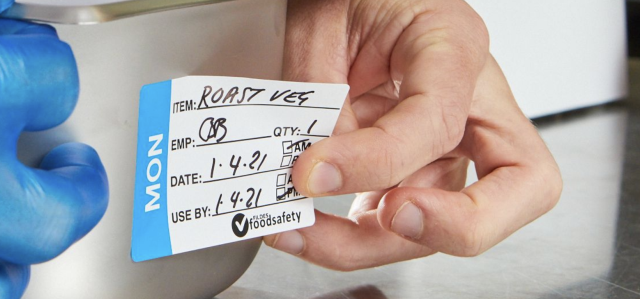
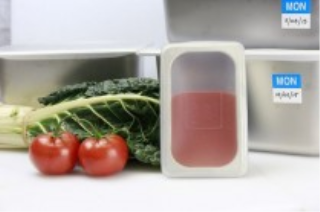
In practice, every container going into cool room or freezer storage needs a label showing the date it was made. The format matters. A label that says "made 2 Sept" without a corresponding use-by or discard date requires someone else to calculate the safe use period. When that calculation varies across shifts or between staff, consistency breaks down. A label that clearly states both when food was made and when it must be discarded leaves no room for interpretation.
Different foods carry different safe storage periods depending on composition and storage conditions. Cooked proteins held at 5°C or below typically carry a shorter safe use window than vacuum sealed items or dry goods. Rather than applying a blanket rule across all prepared food, it is worth establishing documented use-by periods for each product category, based on FSANZ guidance or advice from your food safety supervisor. Having that documented rather than informally understood is what allows the system to function correctly across every shift.
Common errors in commercial kitchens include labelling containers with only a made-on date and no discard date, using handwritten labels that are illegible or that detach from surfaces in cool room conditions, applying different date formats across staff, and not labelling at all during peak service periods. None of these hold up under inspection.
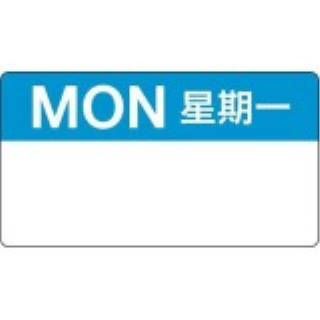
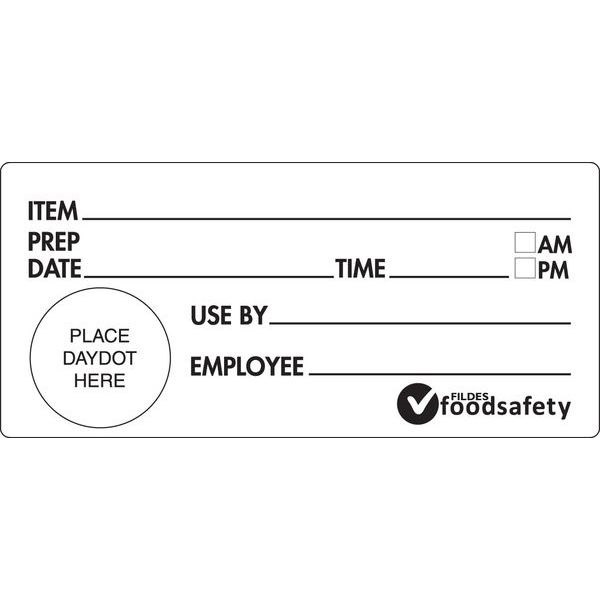
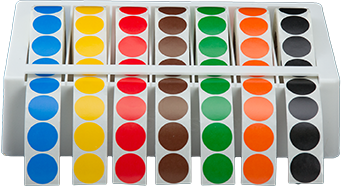
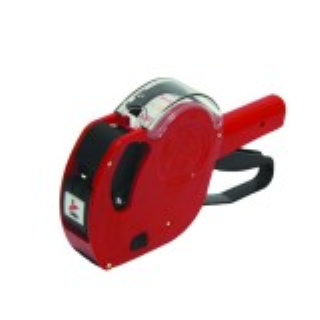
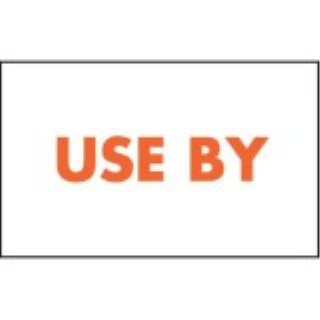
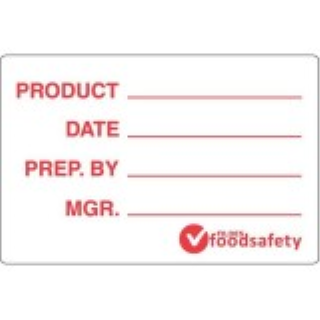
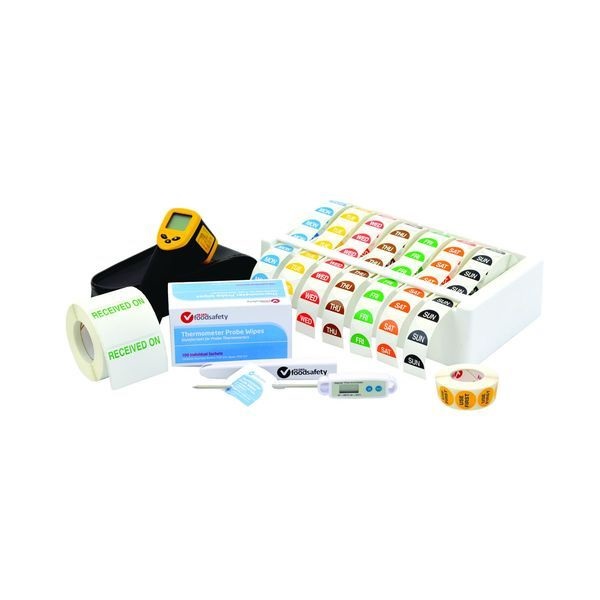
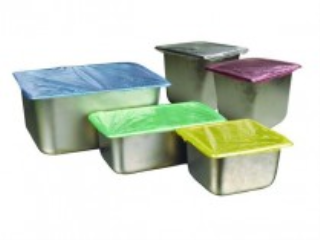
Fildes Food Safety stocks a comprehensive range of date and rotation labels for commercial kitchen environments, including use-by and use-first labels, shelf life labels, prep and product labels and day dot labels in removable and dissolvable adhesive or permanent and durable adhesive types, which are most suited for refrigerated and freezer storage.
Visit www.foodsafetysolutions.com.au to browse the range, or call 1800 673 644 or email sales@fildesfoodsafety.com.au to order.
Share